Open Enrollment 2026: Your Complete Guide to ACA Health Insurance Enrollment
Key dates, step-by-step enrollment instructions, and the most common mistakes to avoid.
What Is Open Enrollment?
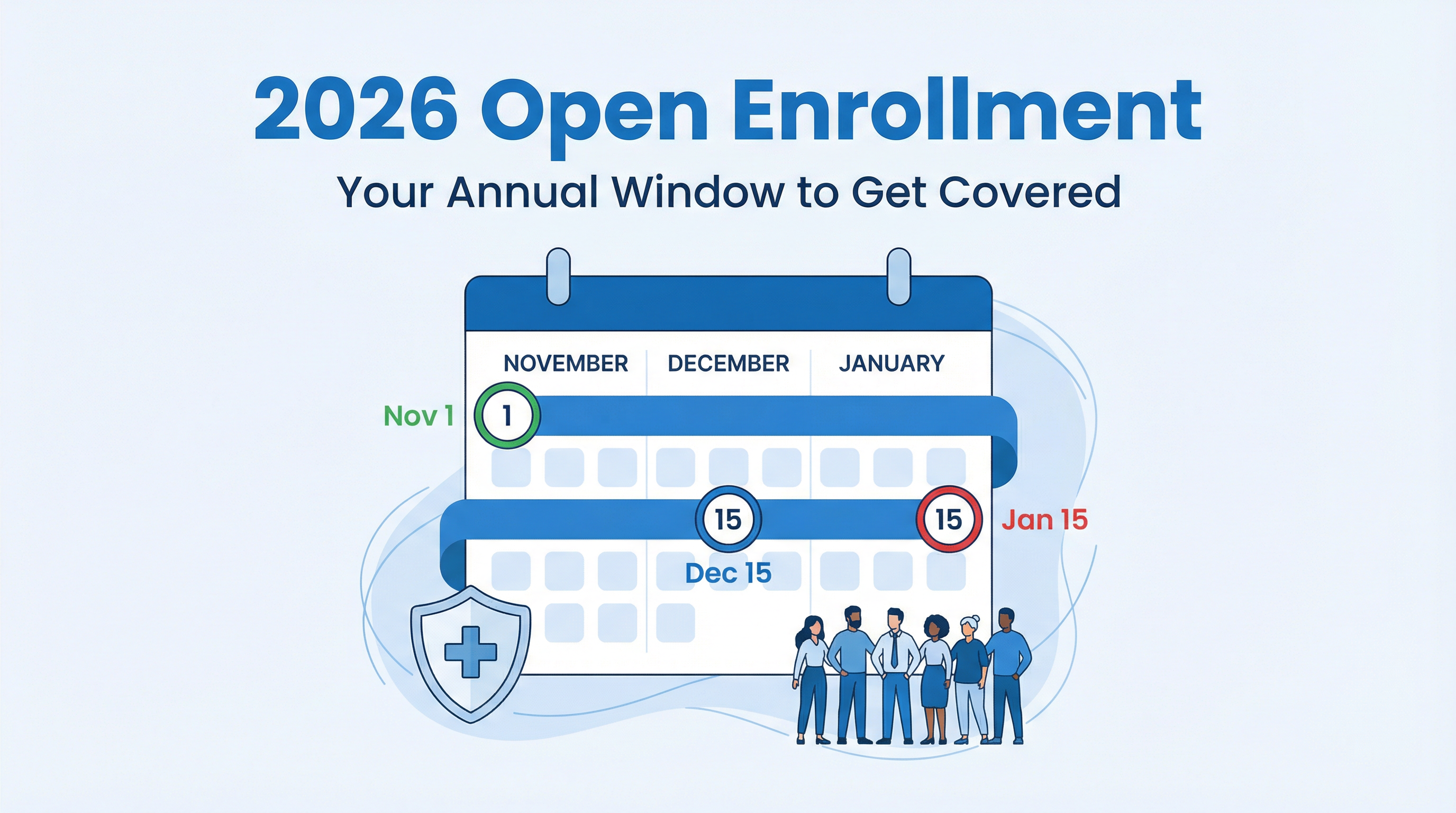
Open Enrollment is the annual window during which anyone can enroll in, renew, or change a health insurance plan on the ACA Marketplace — regardless of their health status, income, or whether they have had any recent life changes. It is the most important event in the health insurance calendar, and acting during this window is the primary way most Americans secure their health coverage for the coming year.
Outside of Open Enrollment, you can only enroll in or change a Marketplace plan if you experience a Qualifying Life Event that triggers a Special Enrollment Period. This makes the Open Enrollment window critical — missing it can mean going without comprehensive coverage for months or an entire year.
2026 Open Enrollment: Key Dates
| Date | Event | What You Should Do |
|---|---|---|
| November 1, 2025 | Open Enrollment begins | Log into HealthCare.gov and start comparing plans |
| December 15, 2025 | Deadline for January 1 coverage | Complete enrollment to have coverage start January 1, 2026 |
| January 15, 2026 | Open Enrollment ends (most states) | Last chance to enroll; coverage starts February 1, 2026 |
Several states with their own Marketplace platforms extend their enrollment deadlines beyond January 15. Check your state's Marketplace for specific dates.
What to Do Before You Enroll: Your Pre-Enrollment Checklist
Taking a few minutes to prepare before you start the enrollment process will save you time and help you make a better decision. Here is what to gather and consider before you begin:
- Your household income estimate for 2026. You will need your best estimate of your total Modified Adjusted Gross Income for the year. This determines your subsidy eligibility.
- Social Security numbers for everyone in your household who will be covered.
- Your current health insurance information (if any), including your plan name and member ID.
- A list of your regular doctors and specialists. You will want to verify they are in-network on any plan you consider.
- A list of your regular prescription medications. Check that they are on the formulary of any plan you consider.
- Your immigration documents (if applicable) to verify your eligibility for Marketplace coverage.
- Your employer's health insurance information (if offered), to determine whether it is affordable under ACA rules.
Step-by-Step: How to Enroll in an ACA Marketplace Plan
- Create or log into your Marketplace account. Go to HealthCare.gov (or your state's Marketplace) and create an account if you do not have one. If you enrolled last year, log into your existing account.
- Complete or update your application. Provide information about your household size, income, and current coverage. The system will determine your eligibility for subsidies and Medicaid.
- Review your eligibility results. The Marketplace will tell you whether you qualify for premium tax credits, Cost-Sharing Reductions, or Medicaid. Review these results carefully.
- Compare plans. Browse the plans available in your area with your subsidies applied. Compare premiums, deductibles, out-of-pocket maximums, and networks. Use the plan comparison tool to view plans side by side.
- Check your doctors and medications. Before selecting a plan, verify that your doctors are in-network and your medications are on the formulary.
- Select your plan and enroll. Once you have chosen your plan, complete the enrollment process. You will receive a confirmation and information about your coverage start date.
- Pay your first premium. Your coverage is not active until you pay your first premium. Watch for a bill from your insurance company and pay it by the due date.
Should You Keep Your Current Plan or Switch?
If you were enrolled in a Marketplace plan last year, your plan may automatically renew for 2026. However, auto-renewal is not always the best choice. Plans change their premiums, deductibles, formularies, and networks every year. A plan that was the best value for you in 2025 may not be the best value in 2026.
You should actively compare your current plan against alternatives during Open Enrollment, especially if: your income has changed significantly, your health needs have changed, your doctors or medications have changed, or your plan's premium has increased substantially. Even if you decide to keep your current plan, reviewing your options annually ensures you are not overpaying.
Pro Tip: If you received a premium tax credit last year and your income changed, update your income estimate when you renew. Failing to update your income can result in receiving too much or too little subsidy, which will be reconciled when you file your taxes.
The Most Common Open Enrollment Mistakes
Choosing based on premium alone. The lowest premium plan is rarely the best overall value. Always calculate your estimated total annual cost including out-of-pocket expenses.
Not checking the formulary. If you take regular medications, failing to verify they are covered can result in hundreds or thousands of dollars in unexpected drug costs.
Missing the December 15 deadline. If you want coverage to start January 1, you must enroll by December 15. Enrolling between December 16 and January 15 means your coverage starts February 1 — leaving a gap in January.
Not reporting income changes. If your income changed from last year, update it on your application. This ensures your subsidy is accurate and reduces the risk of a tax-time surprise.
Our agents are available throughout Open Enrollment to help you compare plans, calculate your subsidies, and enroll in the right plan for your needs — at no cost to you. Call 888-982-0356 today.
Ready to Find the Right Health Plan?
Our FFM-certified agents are standing by to help you compare plans, calculate your subsidies, and enroll in minutes. There is no cost to use our service.
Get Free Quote Now Call 888-982-0356